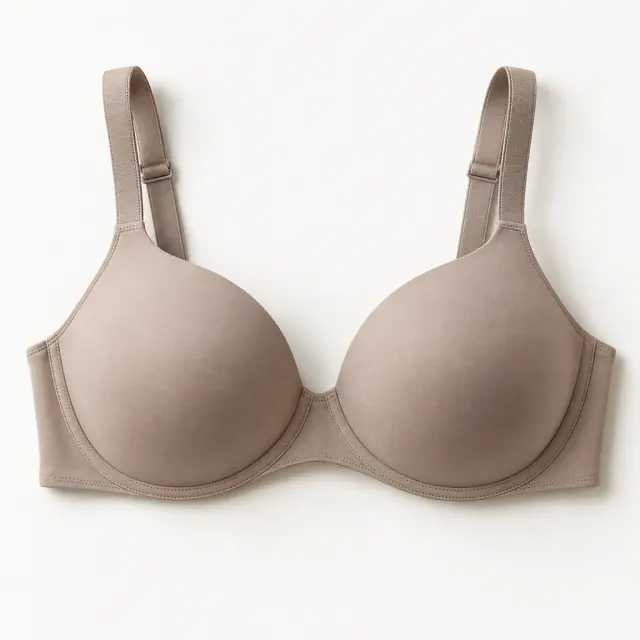
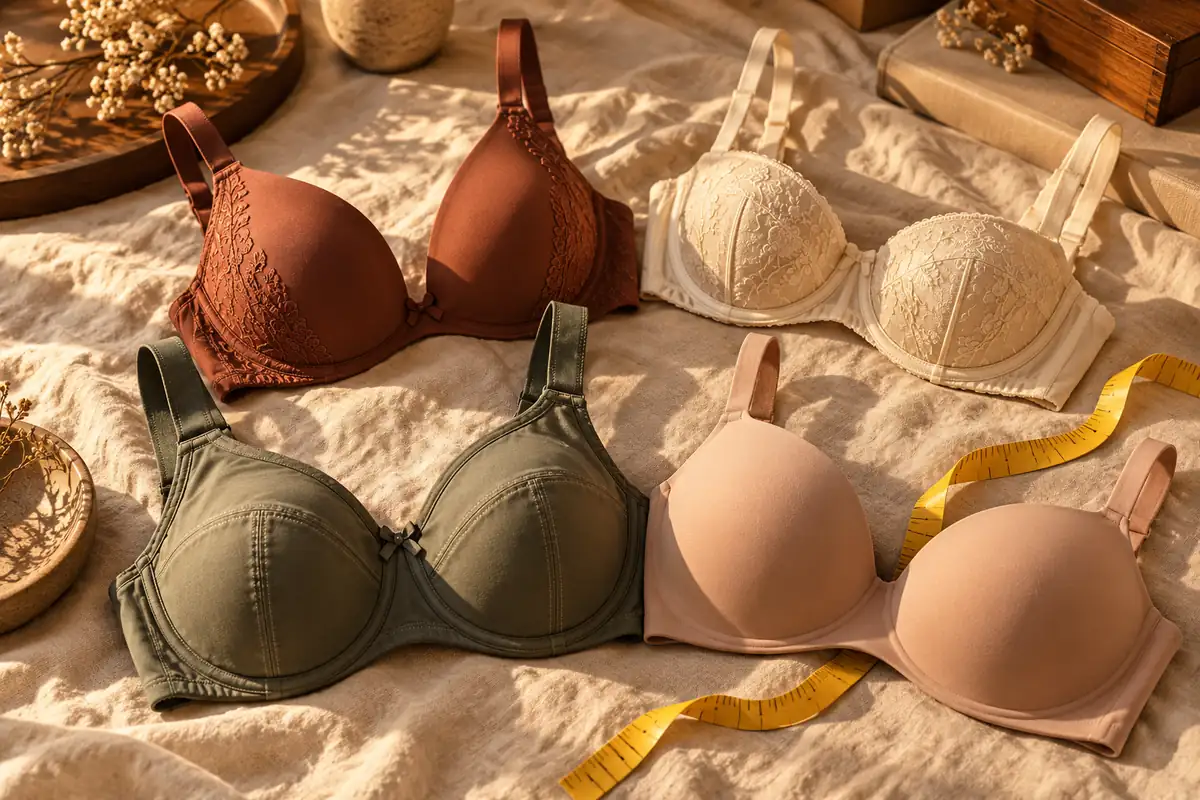
Shape and size are different things
Your bra size comes from two measurements: the snug underbust for the band and the difference to your full bust for the cup. The calculator does that sum. Shape is about how the same amount of tissue is spread out: how far it sticks out, where the fullness sits, and how far apart the breasts are.
Two people can wear a 34D and need very different bras. That is why a size that fits in one style gapes in another. The 4-point fit check helps you tell the two kinds of problem apart.
There is no right or best shape. These are simple descriptions that point you to bras that are more likely to fit. Most people are a mix of several.
Shallow or projected
This is about depth: how far the breast sticks out from the chest compared with how wide its base is.
- Shallow: the tissue spreads over a wide base and does not stick out far. Side-on, the profile is flatter.
- Projected: the tissue sits on a narrower base and sticks out further. Side-on, the profile is deeper and rounder.
A quick check: lean forward to about 90 degrees. Projected breasts hang deep and rounded. Shallow breasts spread and look flatter.
Full on top or full on bottom
This is about where the fullness sits above and below the nipple.
- Full on top: similar fullness above and below, or more above. Cups with low necklines can cause spill at the top.
- Full on bottom: most of the tissue sits below the nipple, and the upper part is flatter. Tall, rigid cups often gape at the top.
Wide-set or close-set
This is about the gap between the breasts. Lay your fingers across your breastbone: three or more fingers of space usually means wide-set, one or less means close-set. The bra for wide set breasts guide covers that test and the fixes in detail.
East-west, bell and teardrop
These describe the overall shape.
- East-west: the nipples point outward, away from the center. The breasts often sit wider apart.
- Bell: narrower at the top and fuller at the bottom, often with more weight below.
- Teardrop: round, slightly fuller at the bottom than the top, without much difference in either direction. Many styles fit this shape.
Shape and style table
Use this as a starting point, then check the fit of each bra on its own.
| Shape | Styles that usually work | Styles that often fail |
|---|---|---|
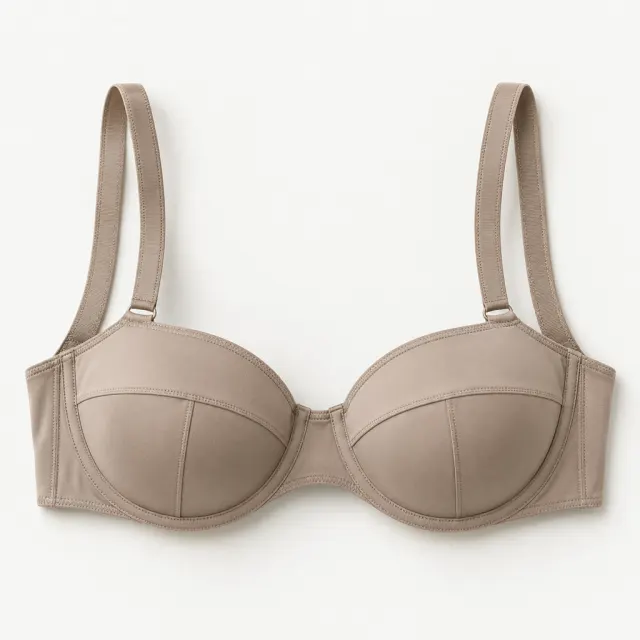
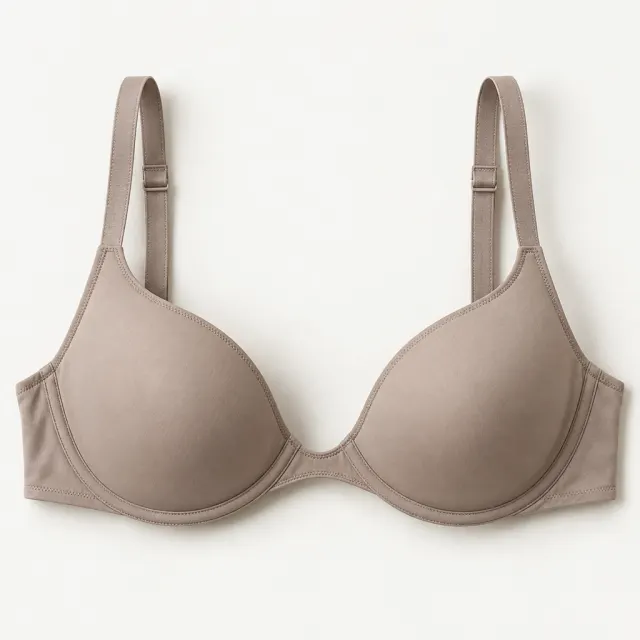
| Shallow | Balconette, demi, plunge, shorter seamed cups | Deep full cups, rigid molded t-shirt cups |
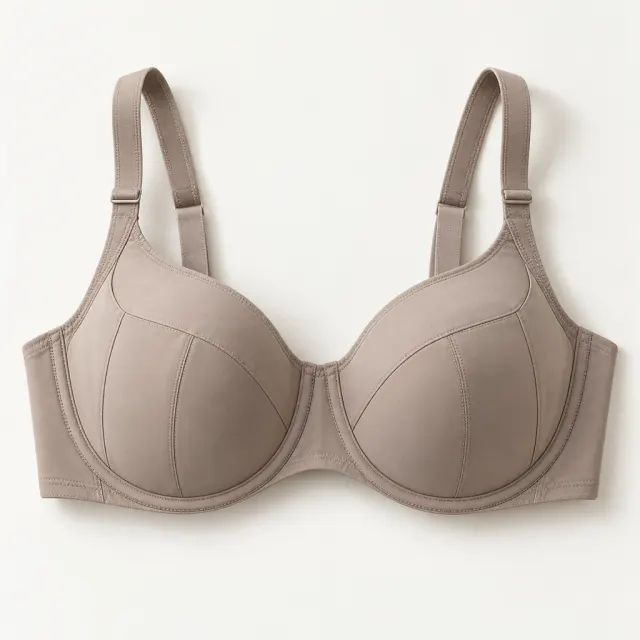
| Projected | Full-cup, deep seamed cups, molded cups with depth | Shallow demi cups, very short plunges |
| Full on top | Full-cup, stretch-lace top edges | Low demi and balconette edges |
| Full on bottom | Balconette, demi, plunge | Tall full cups, rigid molded cups |
| Wide-set | Balconette, low or wide gore, side support | Tall narrow gores, deep plunges |
| Close-set | Plunge, narrow or low gore | Wide gores, widely spaced cups |
| East-west | Side support panels, balconette with a wide frame | Narrow plunges that pull inward |
| Bell | Full-cup, seamed cups with lift, firm bands | Shallow molded cups |
| Teardrop | Most styles; t-shirt, balconette, full-cup | Few; check fit as usual |
The types of bras guide describes each style in more detail.
Bra for shallow breasts
Shallow breasts are one of the most common reasons a bra in the right size still gapes. The cup has more depth than the breast fills, so the top edge stands away from the chest.
What helps:
- Choose shorter, wider cups. Balconette, demi and many plunge styles have less depth and sit flatter.
- Try seamed cups. Panels with a horizontal seam often follow a shallow shape better than one molded piece.
- Avoid deep full cups. They are built for projected shapes and gape at the top on shallow ones.
- Don’t size down the cup too fast. Going down one cup to remove the gap often makes the wire too narrow, so it sits on tissue at the side. Try another style in the same size first.
- Look at the wire width. Shallow breasts often have a wide base, so the wire may need to be wide even when the cup is shallow.
If a bra fits at the wire but gapes at the top, it is very likely a depth problem, not a size problem.
Uneven shapes
Many people have one breast slightly larger or shaped a little differently from the other. That is common. The bra for uneven breasts guide covers how to fit the larger side and even out the smaller one.
Shape can change
Shape shifts with weight, pregnancy, breastfeeding, hormones and age, just as size does. If bras that used to fit now gape or spill, measure again with the how to measure bra size guide and look at shape again too. If a breast changes suddenly in size, shape or feel, see a doctor.
Sources & method: sizing rules follow the standard band-and-cup system used by UK, US, AU and EU brands, checked against fitting guides from specialist retailers and fitting communities. How we work.