How to use this chart
Sports bras come in two kinds of sizing. Many are sold in letter sizes, XS to XXL. Others use a band and cup, like a regular bra. This page covers both.
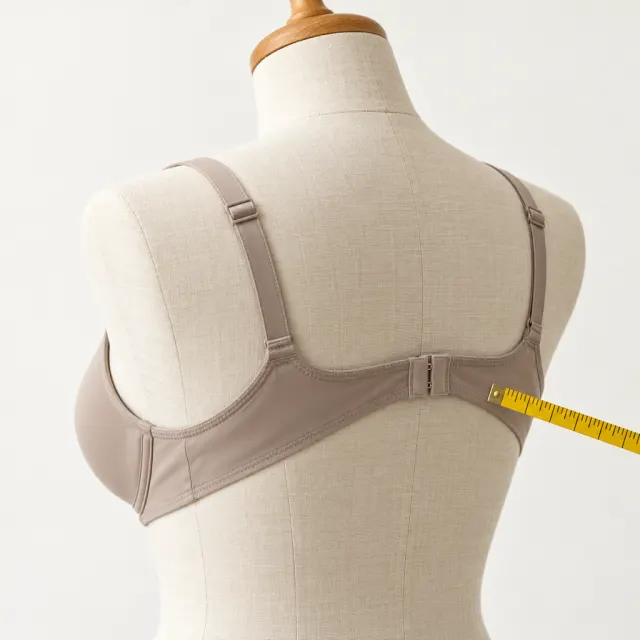
You need two numbers: your band and your cup letter. If you don’t have them, the calculator gives you both, or follow the measuring guide. Measure your underbust snug and level, with no inches added.
Brands vary. This chart is brand-neutral. It shows where most letter sizes tend to land, not what any one brand uses. When a brand publishes its own chart, that chart wins.
Sports bra size chart: letter size by band
| Letter size | Band (US/UK) | Underbust, inches | Underbust, cm | Cups it usually suits |
|---|---|---|---|---|
| XS | 30–32 | 29–32 | 74–81 | A–C |
| S | 32–34 | 31–34 | 79–86 | A–C |
| M | 34–36 | 33–36 | 84–91 | A–D |
| L | 36–38 | 35–38 | 89–97 | A–D |
| XL | 38–40 | 37–40 | 94–102 | B–D |
| XXL | 40–42 | 39–42 | 99–107 | B–DD |
The cup column is a rough guide. A letter-sized sports bra has one cup shape for each size, so it fits a narrow range of busts best. If your cup letter sits outside the range for your band, a band-and-cup sized sports bra will usually fit better.
Remember that cup letters scale with the band. A 30D and a 40D are very different cups, which the cup size guide explains.
The in-between rule: size by band first
The band does most of the supporting work in any bra, and even more so in a sports bra. So when your measurements point to two letter sizes, follow the band.
| Your situation | What to do |
|---|---|
| Band says S, bust says M | Choose S. If the cups are tight, look for a band-and-cup style in your size. |
| Band is between two sizes, low-impact use | Choose the larger size for comfort. |
| Band is between two sizes, high-impact use | Choose the smaller size for a firmer hold, if you can breathe deeply in it. |
| Band fits, cups spill or press hard | Try a band-and-cup sports bra, or an encapsulation style. |
| Band rides up during exercise | Go down one letter size, or one band size with one cup up. |
That last fix uses sister sizes: one band down and one cup up keeps the same cup volume. A 36C and a 34D hold the same cup, but the 34D gives a firmer band.
Compression vs encapsulation by cup size
There are two main ways a sports bra controls movement:
- Compression presses the breasts against the chest. Usually a pull-on style with no separate cups.
- Encapsulation holds each breast in its own cup, like a regular bra. Often has hooks and adjustable straps.
- Combined styles use separate cups plus a compression layer.
| Cup size | Low impact | Medium impact | High impact |
|---|---|---|---|
| AA–B | Compression | Compression | Compression or combined |
| C–D | Compression | Compression or combined | Encapsulation or combined |
| DD–DDD | Compression or encapsulation | Encapsulation | Encapsulation or combined, band-and-cup sized |
| G and up (US) | Encapsulation | Encapsulation | Encapsulation or combined, band-and-cup sized |
This is a general rule, not a limit. Some people with fuller busts like compression for yoga, and some people with smaller busts prefer separate cups. Comfort over a full workout is the real test.
Impact level by activity
Brands usually rate sports bras as low, medium or high impact. Match the rating to the most demanding thing you do in it.
| Impact level | Typical activities |
|---|---|
| Low | Walking, yoga, pilates, stretching, strength training with little jumping |
| Medium | Cycling, hiking, skiing, dance classes, gym circuits |
| High | Running, jumping rope, HIIT, horseback riding, team sports, boxing |
If you wear one bra for several activities, buy for the highest-impact one. A high-impact bra works for yoga, but a low-impact bra will not hold you well on a run.
Band-and-cup sports bras
Band-and-cup sports bras use the same sizing as everyday bras, such as 34DD. Use your normal size as a starting point, then check the fit. They are worth considering if:
- your cup letter is outside the range for your letter size in the chart above;
- you need high-impact support from DD cups and up;
- letter sizes always fit your band or your bust, but never both.
For conversions between US, UK and EU labels, see the bra size chart.
Fit checks for a sports bra
Try it on and move as you would in a workout:
- Jump or jog on the spot. Movement should feel controlled, with no bounce that hurts.
- Lift both arms. The band should stay level and not ride up.
- Breathe deeply. You should be able to take a full breath.
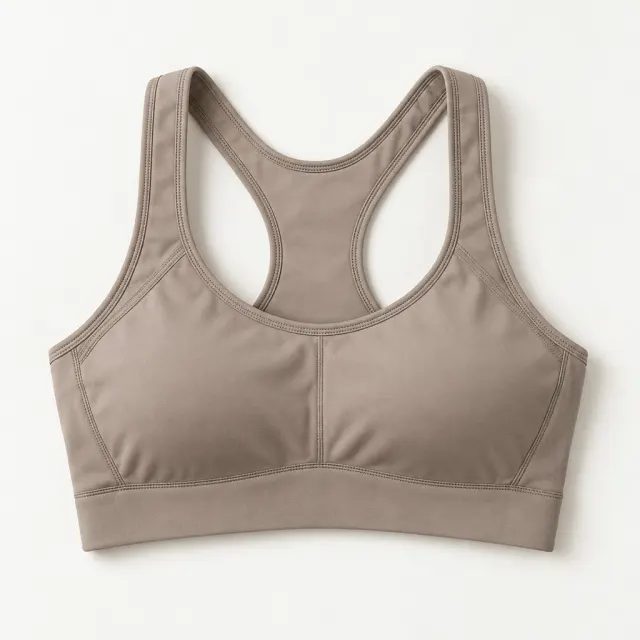
- Check the straps. They should not dig in. On racerback styles, the back should lie flat.
- Check the cups. No spill at the top or sides, and no wrinkles in fitted cups.
Sports bras lose elasticity with wear and washing. When the band starts to ride up in a size that used to fit, it is time for a new one.
Sources & method: sizing rules follow the standard band-and-cup system used by UK, US, AU and EU brands, checked against fitting guides from specialist retailers and fitting communities. How we work.